Sharepoint 2013 Branding Templates Download

Sharepoint 2013 Branding Templates Download

We need SharePoint Online client components SDK installed on the client machine, to be able to connect and work with SharePoint Online objects programmatically. We can download and install CSOM assemblies for SharePoint Online from https://www.microsoft.com/en-us/download/details.aspx?id=42038,

install client side SDK for sharepoint online powershell

This installs a couple of assemblies (DLL files!) at folder "C:\Program Files\Common Files\microsoft shared\Web Server Extensions\16\ISAPI"

powershell to install sharepoint online assemblies

Once installed, you can reference them in your PowerShell scripts as:

#Load SharePoint CSOM Assemblies Add-Type -Path "C:\Program Files\Common Files\Microsoft Shared\Web Server Extensions\16\ISAPI\Microsoft.SharePoint.Client.dll" Add-Type -Path "C:\Program Files\Common Files\Microsoft Shared\Web Server Extensions\16\ISAPI\Microsoft.SharePoint.Client.Runtime.dll"  #Get Credentials to connect $Cred= Get-Credential $SiteURL = "https://crescent.sharepoint.com"   #Setup the context $Ctx = New-Object Microsoft.SharePoint.Client.ClientContext($SiteURL) $Ctx.Credentials = New-Object Microsoft.SharePoint.Client.SharePointOnlineCredentials($Cred.Username, $Cred.Password)  #Get The Web $Web =  $Ctx.Web $Ctx.Load($Web) $Ctx.ExecuteQuery()  #Get Web Title Write-host $Ctx.Web.Title              

How about downloading and installing CSOM assemblies using PowerShell?

#Parameters $DownloadURL = "https://download.microsoft.com/download/B/3/D/B3DA6839-B852-41B3-A9DF-0AFA926242F2/sharepointclientcomponents_16-6906-1200_x64-en-us.msi" $Assemblies= @(         "C:\Program Files\Common Files\microsoft shared\Web Server Extensions\16\ISAPI\Microsoft.SharePoint.Client.dll",         "C:\Program Files\Common Files\microsoft shared\Web Server Extensions\16\ISAPI\Microsoft.SharePoint.Client.Runtime.dll"     )  #Check if all assemblies given in the list are found $FileExist = $True ForEach ($File in $Assemblies) {     #Check if CSOM Assemblies are Found     If(!(Test-Path $File))     {         $FileExist = $False; Break;     } }  #Download and Install CSOM Assemblies If(!$FileExist) {     #Download the SharePoint Online Client SDK     Write-host "Downloading SharePoint Online Client SDK..." -f Yellow -NoNewline     $InstallerPath = "$Env:TEMP\SharePointOnlineClientComponents16.msi"     Invoke-WebRequest $DownloadURL -OutFile $InstallerPath     Write-host "Done!" -f Green          #Start Installation     Write-host "Installing SharePoint Online Client SDK..." -f Yellow -NoNewline     Start-Process MSIExec.exe -ArgumentList "/i $InstallerPath /qb" -Wait     Write-host "Done!" -f Green } Else {     Write-host "SharePoint Online CSOM assemblies are already installed!" -f Yellow }              

Salaudeen Rajack

Salaudeen Rajack is a SharePoint Architect with Two decades of SharePoint Experience. He loves sharing his knowledge and experiences with the SharePoint community, through his real-world articles!

Sharepoint 2013 Branding Templates Download

Source: https://www.sharepointdiary.com/2018/12/download-install-sharepoint-online-client-side-sdk-using-powershell.html

Share:

Brand Mention Template

Brand Mention Template

It has been a tumultuous year in the wonderful world of branding. Exciting new brands, such as iPod, hit their stride; respected older brands, such as Martha Stewart, faltered; and classic brands, such as Mustang, proved they still have juice. Destination branding, from Las Vegas to Jordan, took off. A brand called Mark Burnett teamed with a brand called Trump to produce the season's hottest TV show, which turned out to be as much a paean to brands as it was a celebration of cutthroat American capitalism.

But perhaps the most significant and ominous development in recent branding history is the emergence of Mecca-Cola, the ideologically driven brainchild of rabidly anti-Zionist French entrepreneur Tawfik Mathlouthi. With its red can adorned with white script, the soda is clearly designed as a challenge to the world's number-one brand. And as if its packaging weren't explicit enough, its tagline, "No more drinking stupid, drink with commitment," is an in-your-face repudiation of the American icon.

While Mecca's message was the most strident dispatch in the branding wars, it also, ironically, summed up some of the most potent themes currently roiling the waters: the debate over global versus local messaging and control; the power of brands to create and reflect social and cultural values; the pressure for brands to be authentic; and the need for companies to recognize a brand's stakeholders (beyond its customers).

Carried aloft by the Internet, and reinforced by the echo chamber of a million always-on consumers, brands have seen their power expand and grow. But that growth has also spawned problems and opportunities that brand managers a decade ago could never have envisioned. Indeed, there may be no more challenging time to figure out a brand strategy than today.

To get a sense of trends shaping the current branding landscape, we talked with experts from New York to New Zealand, and tagged along at a meeting organized by futurist think tank Global Business Network. We identified seven trends that are likely to influence the conversation for the year to come.

1. Brands will be authentic.

Long before Enron and WorldCom were exposed as frauds, consumers had begun scrutinizing brands to find the truth behind the image. Did Nike use sweatshop labor to make its shoes? Did McDonald's lard its products with fat? Aided by the Internet, consumers can now know almost everything about a company. Chris Riley, founder and chief strategist of Studioriley, a company that specializes in creating economically, socially, and environmentally "healthy" brands, says companies must now reckon with an increasingly visible value chain. He tells of a teenager in a Nike focus group in Los Angeles picking an Air Jordan shoe out of a pile and identifying the exact factory in Vietnam where it had been made. "Branding is a way of articulating the core values of the corporation," says Riley. "Companies need to project into the world who they really are."

With cynicism about corporations at an all-time high, companies are under pressure to prove that what they stand for is something more than better, faster, newer, more. A company that can demonstrate it's doing good and doing well — think Ben & Jerry's, or Aveda (see page 50) — will find its brand image enhanced, Riley says. But consumers must sense that the actions are sincere and not a PR stunt that will evaporate as soon as the cameras are turned off.

2. The experience will be the expression of the brand.

Ten years ago, it would have been hard to imagine building a national brand with little or no advertising. Then along came Krispy Kreme, Google, and Amazon.com. They're among a small group of hugely powerful brands that gained prominence without once appearing on . Brian Collins, executive creative director of the Brand Integration Group at Ogilvy & Mather, says brands are moving from a marketing model that says, "I'm going to talk to you and you better listen up" to an experiential model. "Marketers need to focus on the way a brand gets brought to life tangibly, where it really lives," says Collins. Whether it's the folksy humor of Southwest Airlines' flight attendants, the boudoirlike ambience of a Victoria's Secret shop, or the Zen-like simplicity of TiVo's remote control, the experience conveys the essence of the brand. And often, it's design that creates the experience.

That design message must now be distinctive enough to hold its energy in a vast array of places: in a magazine, on a T-shirt, on a coffee mug, at a skate park, on the subway, or blown up 10 stories high on a billboard in Times Square. "It's a lot of work," Collins says, "and you must sweat the details."

3. Brands will be hard-wired in our brains.

Neuroscience has now confirmed what we had suspected all along: If you like Coke over Pepsi, it's all in your head. For that branding breakthrough, we can thank Read Montague, a neuroscientist at Baylor College of Medicine, who cooked up an experiment to keep his teenage daughter occupied as she helped out in his lab last summer. Montague wired up a group of volunteers and re-created the Pepsi challenge while monitoring their brain activity on an MRI. The results were astonishing. In blind taste tests, subjects' brains indicated a clear preference for Pepsi. But when they were told which of the samples was which, their brains switched brands. "The brand image of Coke in the nervous systems of the people we tested engaged systems in charge of cognitive control and commandeered their behavior," Montague says. In short, the power of the Coke brand was enough to override an objective preference.

A commercial application of the kind of work Montague is doing is already in play at BrightHouse, an Atlanta consulting firm. It offers clients the services of its Neurostrategies Group, a team that "uses neuroscience to influence higher-order strategic business decisions," such as identifying which brand benefits might prompt a consumer to buy. The company, which has done work for such clients as Home Depot, Pepperidge Farm, and Kmart, maintains that its projects are designed to give companies a better perspective on how people develop relationships with products, brands, and companies, not to help them design products or test ad campaigns. But scientists at BrightHouse recently identified the region of the brain that responds to products that most resonate with a consumer's self-image — the space that lights up, for example, if a Chevy guy is shown a picture of a Silverado Half-Ton Crew. Montague thinks it's only a matter of time before neuromarketing finds a way to commercialize that discovery. Imagine, he says, a neural focus group where brand managers could test messages to see if they resonated with a target audience. "Bringing a new product to market is a huge risk for a company," he says. "If nothing else, this would add another quantitative data point to what you know about your demographic."

4.The line between entertainment and brands will blur.

When Beverly Hills hairstylist Jonathan Antin, the diva of Bravo's latest hit show, Blow Out, flicks his AmEx card to make business happen, are we watching entertainment or advertising? The reality-TV show is one of the more exotic hybrids of a hot subspecies of branding dubbed "advertainment." Alarmed by the defection of viewers from network TV, particularly those 18- to 34-year-olds who comprise advertising's demographic sweet spot, marketers are seeking ever more creative ways to connect. American Express's chief marketing officer, John Hayes, has been at the forefront of the trend, experimenting with an array of new approaches, including "Web-isodes" featuring Jerry Seinfeld, Superman, and an AmEx card; art exhibits with photographer Annie Liebowitz; a concert with Sheryl Crow; and club events in which the L.A. House of Blues morphed into the "House of Blue" for AmEx's Blue card. The company also sponsored last year's reality-TV show The Restaurant on NBC, and has favored-brand status on Blow Out. The implications for network TV loom large. In 1994, AmEx spent 80% of its marketing budget on TV; by 2003, that number had fallen to 35%. The change, Hayes says, was driven by the defection of audiences to other outlets — DVDs, the Web, cable, video games — and technologies, such as TiVo, that let viewers skip commercials. "We need to be where people are and involved in things they value," Hayes says. But, as with any new venture, he concedes there are still a few kinks to be worked out. AmEx's presence on The Restaurant was, he admits, occasionally ham-handed, as chef Rocco paused, midcrisis, to extol the virtues of the company's small-business service. That's a gaffe he hopes to avoid in Blow Out. "The critical part is finding the fine line between entertainment that can have commerce within it and feeling like it's too much of an intrusion," he says. "That's the art."

5. Increasingly complex brands will require new organizational structures.

In most organizations, corporate brand management is the purview of the chief marketing officer. That's a dangerously narrow view of a brand's universe, says Bob Lurie, CEO of M2C, the marketing strategy division of Monitor Group. "Companies get a license to operate from society," he says. "If you think about your brand as something that [only] your customers care about, you'll get whacked upside the head." Today's brands operate in a global environment and touch many constituencies, lots of whom will never buy the product. They may range from environmental groups and regulatory agencies to unions, activists, and the media.

"Constituents are much more aggressive than in the past," Lurie says. "More people are policing social goods, and technology enables them to share information quickly and easily." While the Sierra Club and a local union may not usually have much in common, they now have the ability to snap into tight focus and connection the instant they discover shared goals. The problem, Lurie says, is that the task of managing these various groups tends to be spread throughout the organization: The legal department has one piece, the government-affairs folks another, and the marketing department yet another. That unintegrated approach can be dangerous when trouble happens. Instead, Lurie suggests, companies should decide who gets responsibility for the brand's reputation by determining which function is most important. In some industries, such as oil and gas, it may be the government-affairs department. In packaged goods, it might be marketing. The company should then map its relevant constituencies as a social network, figuring out whose interests are likely to be aligned with whose and then reach out to them. It's a big job, says Lurie, but it's an investment that will more than pay for itself in a crisis. "The more you're out in front, the less likely it is that they'll torch you when something goes wrong," he says.

6. Brands will create social and cultural values.

In 2000, Naomi Klein, antiglobalism activist and author of No Logo: No Space, No Choice, No Jobs (Picador), predicted that consumers would rise up against corporations whose brands had infiltrated their homes, their schools, and their public spaces. Whoops. While antibrand activism has waned since the 1999 WTO meeting in Seattle, people's affection for brands seems to have grown. Kevin Roberts, CEO of Saatchi & Saatchi, recently launched a site called Lovemarks.com, where people can write mash notes about their favorite brands. At last count, there were more than 1,800 postings, expressing admiration for everything from OshKosh overalls to Zeiss camera lenses.

That kind of passion has prompted a shift from brands as mere product identifiers to brands as personal identifiers — a development that threatens to confound the notion of a corporation as a brand's sole proprietor. "Companies have treated their brands as intellectual property that needs to be controlled, managed, and leveraged, not cultural property to be shared, remixed, and reconstrued," says design strategist Andrew Zolli, founder of Z+ Partners, a New York trend-analysis and foresight firm. Zolli notes that brands increasingly make a cultural and political statement about their adherents. In Karachi, the act of drinking a Coke instead of Mecca-Cola is now an ideological gesture. So, too, are consumers making statements about themselves when they choose to shop at Whole Foods versus Safeway, drive a Toyota Prius instead of a Ford Expedition, or purchase an Apple computer instead of a PC.

Smart companies are reaching out to their customers, encouraging participation in their brands — allowing fan sites and Meetup groups — even if that means letting go of the strings of control a bit. Lucasfilm, for example, didn't call in the lawyers when fans began creating their own Star Wars videos. Indeed, it posted sounds (like Darth Vader breathing) and other digital material on its Web site for fans to play with. "People are going to do things with brands because of these personal identity issues that brand managers need to tolerate and not try to shut down," Zolli says.

7. America will be reborn as a more culturally sensitive brand.

It's hard to imagine a time when America's image was so tarnished abroad. Between long-standing complaints about America's cultural imperialism as expressed by everything from Microsoft to EuroDisney, to the fierce anti-Americanism spawned by the war in Iraq, it's not an easy time to be an American multinational. Indeed, a recent study of 30,000 people outside the United States by the global market-research company NOP World found that the total number of consumers worldwide who use American brands had fallen to 27% from 30% over the past 12 months, a trend NOP managing director Tom Miller called a "warning sign for brands."

But some optimists in advertising think it's still possible for America to get its groove back. "People still love Americans. They just don't like our policies and our government," says Claude Singer, senior VP of branding firm Siegel & Gale. Recently, he says, a new group has arisen to try to put forward the best side of American business. Business for Diplomatic Action, headed by DDB chairman Keith Reinhard, aims to help fight anti-Americanism by teaching businesspeople to be more sensitive and responsive to local needs. The idea is not to advertise how great America is, but to get U.S. companies and their employees to act more as ambassadors for the brand called America. Cynics would point to previous failed efforts, most notably Charlotte Beers's campaign for the State Department to burnish America's image in the Muslim world. But this effort is based on action, not slick advertising. And nobody says it's going to be easy. Indeed, Singer allows that it may take some future Reaganesque figure to articulate this vision. But the brand's strength, he says, is that it's authentic. "There's an idea there of liberty, and once upon a time, our country did stand for it," he says. "At some point in the future, there will be an understanding again of who we are and what we stand for. And at that point, we will have a real brand and not just a fake Madison Avenue concept."

Linda Tischler is a Fast Company senior writer. When it comes to cola, she is strictly nonpartisan.


Discussion Guide

Interested in further exploring some of the ideas and issues in this article? Consider starting a Fast Company reading group. Here are some possible conversation catalysts:

How would you rate the global perception of iconic American brands such as Coke, McDonald's, and Wal-Mart? What about the personal brands discussed in previous issues, people such as George W. Bush, Michael Jordan, Martha Stewart, and Bill Clinton? While Mecca-Cola tries to capitalize off anti-American sentiments, many American brands are still faring well overseas. Why might this be? What conditions might make a company operating overseas want to try and establish a separate culture — and when is American heritage a unique part of a brand?

Run through the seven branding trends identified in the article and consider some of their implications. What happens when "advertainment" becomes too blurry? Is the movie Harold and Kumar Go to White Castle good product placement or a 90-minute ad? Are American brands acting more sensitive (#7)? Should companies feel the need to defend America or are they best acting nationless?

Consider these seven steps as they apply to the Jeff Bezos story. What is your current perception of Amazon and how has it changed?

Brand Mention Template

Source: https://www.fastcompany.com/50040/good-brand

Share:

Plastic Pouch Packaging Mockup

Plastic Pouch Packaging Mockup

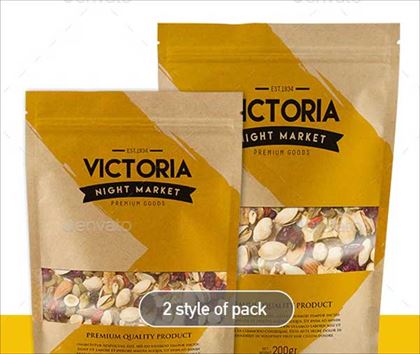
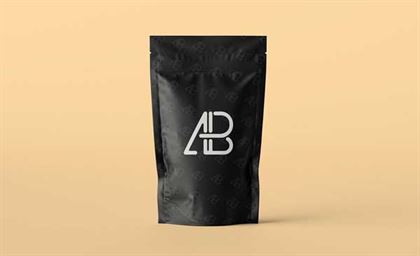
Create a clean and amazing presentation for your pouch packaging design with these stunning Pouch Packaging Mockups. The sales of your products to quite a large extent depend upon its packaging as well. Customers go for products that deliver an appealing look which completely depends on the outer packaging of the same. Apart from this, customers also opt for products that come with packaging that is properly packaged so as to preserve the quality of food products. However, coming up with such a pouch packaging design is not at all a cakewalk. You have got to put in so many efforts and this would be in addition to the valuable time that you would have to invest if you are looking forward to creating an eye-catching pouch Food packaging design.

Well, if you are willing to reduce these efforts and time to the minimum then our Pouch Packaging Mockups would be of use to you. The type and size of your product do not matter as long as you are willing to get hold of the best of the best packaging design for the same. If you aim at finding the finest Milk Packaging Mockups, Pouch Packaging Mockup Design for your products then you have visited just the right website.

Paper Coffee Bag Mockup Set

Paper Coffee Bag Mockup Set

Download Now

Plastic Snack Pouch Packaging Mockup

Plastic Snack Pouch Packaging Mockup

Download Now

Pouch Packaging Mockups Bundle

Pouch Packaging Mockups Bundle

Download Now

Zip Coffee Pouch Mockup

Zip Coffee Pouch Mockup

Download Now

Small Pouch Packaging Mockups

Small Pouch Packaging Mockups

Download Now

Foil Bag Mockup PSD Template

Foil Bag Mockup PSD Template

Download Now

Wet Wipes Pouch Packaging Mockup

Wet Wipes Pouch Packaging Mockup

Download Now

Coffee Pouch  Packaging Bag PSD Mockup Template

Coffee Pouch  Packaging Bag PSD Mockup Template

Download Now

Chocolate Bar Package Mockup

Chocolate Bar Package Mockup

Download Now

Pouch Packet Packaging Mockup

Pouch Packet Packaging Mockup

Download Now

Plastic Pouch Bag PSD Mockup Template

Plastic Pouch Bag PSD Mockup Template

Download Now

Transparent Plastic Packaging Mockup

Transparent Plastic Packaging Mockup

Download Now

Kraft Pouch Bag Packaging Mockup

Kraft Pouch Bag Packaging Mockup

Download Now

Pouch Bag Mockup Set Templates

Pouch Bag Mockup Set Templates

Download Now

Coffee Bag Packaging Template PSD Mockup

Coffee Bag Packaging Template PSD Mockup

Download Now

Foil Pouch Packaging Mock-Up

Foil Pouch Packaging Mock-Up

Download Now

Pouch Packaging Bag Editable Mockup

Pouch Packaging Bag Editable Mockup

Download Now

Cosmetic Blank Pouch Packaging Mockup

Cosmetic Blank Pouch Packaging Mockup

Download Now

Standup Pouch Packaging Mockup

Standup Pouch Packaging Mockup

Download Now

Cosmetic Pouch Mock-ups

Cosmetic Pouch Mock-ups

Download Now

Vector Illustration Pouch Packaging PSD Mockup

Vector Illustration Pouch Packaging PSD Mockup

Download Now

Food Bag Plastic Pouch Packaging Mockup

Food Bag Plastic Pouch Packaging Mockup

Download Now

Coffee Paper Bag Mockup

Coffee Paper Bag Mockup

Download Now

Paper Food Bag Packaging Set

Paper Food Bag Packaging Set

Download Now

Transparent Foil Pouch Packaging Mock-Up

Transparent Foil Pouch Packaging Mock-Up

Download Now

Kraft Paper Bag PSD Mockup Template

Kraft Paper Bag PSD Mockup Template

Download Now

Photo Realistic Pouch Package Mockup

Photo Realistic Pouch Package Mockup

Download Now

Metallic Pouch Packaging Mockup Set Templates

Metallic Pouch Packaging Mockup Set Templates

Download Now

Vector Blank Pouch Packaging PSD Mockup Template

Vector Blank Pouch Packaging PSD Mockup Template

Download Now

Foil Bag Packaging Mockup

Foil Bag Packaging Mockup

Download Now

Coffee Pouch Packaging Mockups PSD Template

Coffee Pouch Packaging Mockups PSD Template

Download Now

Foil Pouch Plastic Bag Packaging Mock-Up

Foil Pouch Plastic Bag Packaging Mock-Up

Download Now

Foil Bottle Pouch Bag Packaging Mock-Up

Foil Bottle Pouch Bag Packaging Mock-Up

Download Now

Pouch Packaging Mockups PSD Design Templates

Pouch Packaging Mockups PSD Design Templates

Download Now

Foil Pouch Simple Bag Mock-up

Foil Pouch Simple Bag Mock-up

Download Now

Paper Bag PSD Mockup Template

Paper Bag PSD Mockup Template

Download Now

In the collection that you are viewing on this page, you would come across a wide variety of Pouch Packaging Mockups that have been handpicked us from various sources available on the internet as we aimed at making you available with a collection of the best Mockup PSD. Our collection includes Pouch Packaging Mockup PSD Free, Free PSD Packing Mockups, Pouch Packaging Design Vector and other such Pouch Packaging Mockup Free Download that are equally stunning and perfectly designed. From paper to foil you would find pouch packaging designs in diverse patterns in order to fit in the requirements of your design.

Plastic Pouch Packaging Mockup

Source: https://www.templateupdates.com/mockups/pouch-packaging-mockups

Share:

Cassette Mockup Free Download

Cassette Mockup Free Download

Vintage Cassette Tape Mockup

In the recent past, retro was nothing but a throwaway term for some song or clothing that was old and out-of-date. "Oh, you're so retro!" was the refrain. It wasn't derogatory but it also wasn't high praise.

However, times change, and it wouldn't be wrong to say that retro is the future! From antique furniture that reminds one of the yesteryears to restaurant condiment squeeze bottle sets, retro and things like "Mid-Century Modern" are all the rage.

A style that consciously imitates trends, music, modes, fashions or attitudes of the past that no longer seem modern, there is no item that screams retro quite as loud as cassette tapes, which came in cuboidal fibre boxes back in the day. These cassettes hold a special place in the heart of every millennial and have a different meaning for the newer generation, but there isn't a soul that doesn't know and totally love them!

For this reason and for the sake of this amazing trend we call retro, we bring to you this vintage mockup inspired by the days of yore. Designed by Pixpine, this cassette mockup comes in a 4800 x 3350 px PSD file, offering a high resolution of 300 dpi making it perfect to use in all your different design projects. Simply insert your cassette and case designs into the designated layers using the smart object layers in Photoshop and you're good to go! You can even choose to customize the colors, along with the highlights and shadows to create a presentation that serves you the best. Export the file in a format of your choice and use them to create awesome posters, graphic designs, promotional content, advertisements and retail presentations, all absolutely free of cost!

Vintage Cassette Tape Mockup 2

Cassette Mockup Free Download

Source: https://unblast.com/free-vintage-cassette-tape-mockup-psd/

Share:

Instagram Template For Women Clothing

Instagram Template For Women Clothing

If you're going to be wearing the same three shirts in all your vacation photos, you want them to be nice shirts. Enter: the eternal quest for the best travel clothes.

Rule number one is to stay within your personal style range. If your travel outfits don't feel as good as the clothes you wear at home, you aren't going to wear them. You want to feel like yourself on the road. If you weren't already into the geometric prints that seem to reappear in travel clothing regardless of season, you're not going to magically start being into them on your trip. Realistically, you may only need one or two new pieces for a trip rather than a whole new wardrobe.

Once you've decided to shop, start off with a unified, simple color scheme so that you can mix and match across your items. Stick to a few basics that you can liven up with accessories, either packed or purchased along the way. "I love to pack clothes in neutral colors, because I know I don't have to pack as many items and can always swap things around for a completely different outfit," said designer Katie Schmidt. "Think of it like creating a capsule wardrobe, so you don't end up with a bunch of clothes that can't even make a single outfit, let alone several."

After you've figured out fashion, it's time to examine function. Choose fabrics that are machine washable, wrinkle-resistant, lightweight, and either stretchy or loose enough to maintain their shape even when shoved in a packing cube and unwashed for long periods of time. Steer away from 100 percent cotton; it takes too long to dry and will wick heat away from your body if it gets wet. You also don't want anything too bulky. The rolling strategy will help keep your clothes both compact and less wrinkled, so make sure your clothes can actually roll up.

"At the end of the day, the highest functionality a piece of everyday clothing can offer me is flexibility within the wardrobe," said Patricia Davis, senior vice president, marketing & communications of Davidson Hotels & Resorts. "I will do almost anything not to check a bag, so on long trips, repeats are a necessity. I often pack a number of items that go well with a number of other items but that can stand up to more than one wear to help expand my outfit possibilities."

These are some of our favorite mainstream and niche clothing brands to help you craft your ideal travel — and who knows, maybe even everyday — wardrobe.

For Merino Wool: SmartWool

Best Travel Clothing Brands

Credit: Courtesy of Zappos

"Merino wool is a fantastic fabric for travel because it's stink-free, moisture-wicking, and lightweight. It's also very breathable, keeping me cozy in cold climates and cool in warm ones," said travel blogger Kay Rodriguez. "My SmartWool gear has kept me warm and stink-free while hiking in Patagonia, horseback riding in Kyrgyzstan, and Northern Lights seeking in the Arctic Circle of Norway."

For Merino Wool: Icebreaker

Best Travel Clothing Brands

Credit: Courtesy of Backcountry

Icebreaker's New Zealand merino frequently tops travelers' lists, as well. I've toted an Icebreaker cardigan around the world and their ski base layers up multiple mountains without complaint. Their selection of tops is particularly impressive.

For Merino Wool: Unbound Merino

Best Travel Clothing Brands

Credit: Courtesy of Unbound Merino

The perfect T-shirt can see you through almost any situation, and Unbound makes a strong bid for the title with their chic merino designs.

For Comfortable Denim: Aviator Jeans

Best Travel Clothing Brands

Credit: Courtesy of Aviator USA

Jeans are controversial as travel clothes. Some people just don't feel comfortable without them and insist they help you blend in, but their bulky nature and slow drying time can make them clunky in the long-term. Enter: the travel jean, designed with extra spandex to avoid sagging between washes and quick-drying fabrics. And, in the case of Aviator's denim, truly excellent deep pockets, including a back zipper pocket.

For Comfortable Denim: Duer

Best Travel Clothing Brands

Duer's performance fabric and signature seat gusset keep their jeans fitting well across wears, even if you can't always stop to refresh them with a wash.

Duer is retailed at Amazon.

For Technical Outdoor Gear: ExOfficio

Best Travel Clothing Brands

Credit: Courtesy of Zappos

ExOfficio is best known for their quick-drying, anti-microbial travel underwear, but their BugsAway and sun-protection clothing lines are also well worth investigating.

For Technical Everyday Wear: The North Face

Best Travel Clothing Brands

Credit: Courtesy of Zappos

Is there anything The North Face can't do? The same construction that makes their gear excel is carried over into their clothing lines. Even better, they're introducing a new FutureLight line for fall 2019 that provides an impressive combo of warmth, waterproofing, and breathability while still packing small enough to bundle your ski clothes into a carry-on.

For Technical Everyday Wear: L.L.Bean

Best Travel Clothing Brands

Credit: Courtesy of L.L. Bean

Always a classic, L.L.Bean builds their products to last, particularly their outerwear. Even better, most of their clothes come in plus-size options up to 3X.

For Packable Basics: Uniqlo

Best Travel Clothing Brands

Credit: Courtesy of Uniqlo

In addition to their excellent basics and packable jackets, Uniqlo's HeatTech, Airism, and new UV Cut lines will keep you layered properly in any conditions. They run from underwear to jackets and scarves for maximum building potential. T+L editors are partial to their stretchy legging-pants.

For Packable Basics: Toad & Co.

Best Travel Clothing Brands

Credit: Courtesy of Toad & Co.

This California-based company focuses on manufacturing all of their clothing using sustainable fabric and practices, nicely complementing their line of basics and prints.

For Business Travel: Ministry of Supply

Best Travel Clothing Brands

Credit: Courtesy of Ministry of Supply

Ministry of Supply makes professional apparel that's comfortable enough to fly in and smart enough to take you straight into the boardroom or on stage to moderate a panel right after landing. Check out their wrinkle-resistant, unrestrictive Kinetic suiting line for men and women; it's pretty revolutionary.

For Adventure Travel: Patagonia

Best Travel Clothing Brands

Credit: Courtesy of Nordstrom

"I've been shopping with this brand consistently for the past few years and have yet to be disappointed," said travel blogger Jenny Smith. Patagonia's extensive product range, quality gear, and ethical company policies continually convert new fans.

For Adventure Travel: Prana

Best Travel Clothing Brands

Credit: Courtesy of Prana

Prana started out as a yoga clothing line, but has expanded into a full travel line with eco-friendly fabrics. "Prana is my favorite travel clothing brand," said Rodriguez. "Their clothes are comfortable, lightweight, and stylish, perfect for the traveler on the go."

For Plus-size Travel Clothes: Columbia

Best Travel Clothing Brands

Credit: Courtesy of Colombia

Blogger Charish Badzinski found her go-to travel piece at Columbia. "I recently found a simple, black, lightweight, sleeveless dress made with wicking fabric. It's so versatile, and flattering to many body types, so it's my favorite piece that I pack," she said. Columbia also offers a nicely comprehensive plus-sized range.

For Function and Fashion: Ably Apparel

Best Travel Clothing Brands

Credit: Courtesy of Ably Apparel

Messy eater planning a trip to Italy? Keep your clothing safe from staining with Ably's stain-resistant Filium fabric technology. The same system that allows stains to slide off helps their clothes dry quickly, as well.

Ably is retailed at Amazon.

For Fashion and Function: Époque Évolution

Best Travel Clothing Brands

Credit: Courtesy of Époque Évolution

This stylish, minimalist design duo makes merino wool dresses and other items that will take you from sightseeing straight through a night out.

For Women's Athleisure Travel Clothes: Athleta

Best Travel Clothing Brands

Credit: Courtesy of Athleta

Multiple travelers we spoke to raved about Athleta's (appropriately) athleisure lines, particularly their pants, which are comfortable enough to work out or hike in but won't look out of place at a post-hike happy hour.

For Women's Travel Clothes: Sarah Liller

Best Travel Clothing Brands

Credit: Courtesy of Sarah Liller

California-based designer Sarah Liller makes simple, super-soft birch rayon designs for women looking to create an ideal capsule wardrobe. The collections are designed in complementary colors for maximum combination potential and, even better, most of the dresses and skirts have pockets.

For Plus-size Women's Travel Clothes: See Rose Go

Best Travel Clothing Brands

Credit: Courtesy of See Rose Go

Finding the perfect outfit gets even harder for plus-sized travelers. See Rose Go offers breathable travel basics that look just and feel as good as straight-size brands in sizes 14-24.

For Men's Travel Clothes: Rhone

Best Travel Clothing Brands

Credit: Courtesy of Rhone

Rhone combines cutting-edge fabric technology with fit-forward design for an impressive line-up of athleisure-meets-business clothing. Their Commuter Pants are particularly popular with travelers.

Instagram Template For Women Clothing

Source: https://www.travelandleisure.com/style/fashion/best-travel-clothes-for-women-men

Share:
banner